Thoughts on Complicated Issues

Dealing with complicated issues is a complicated issue. I find that it is impossible for a non-expert to rationally debate a complicated issue. Instead, it all comes down to belief.

Take global warming, for instance. There are people in the world who have spent their lives studying this: climatologists. As scientists (the real climatologists anyway) they posit a theory, test it against empirical evidence, publish the results, and let their peers (other real climatologists) analyze, critique, and collectively approve or reject it. The Wikipedia article references a separate page that cites hundreds of scientific organizations who collectively agree that the world is warming overall, the climatological system is changing, and that these changes are attributable to human activities. More conclusive, though, is that aside from four groups who stand by non-committal statements, "no scientific body of national or international standing has maintained a dissenting opinion" (the last was the American Association of Petroleum Geologists who updated their stance in 2007 with a non-committal statement.)

However, I am not a climatologist by any means. As such, I'm left to judge by belief alone: I believe that climatologists have studied this issue and agreed that humans are causing climate change, and that these climatologists do not have sufficient ulterior motives to lie. I don't think it's possible to predict exactly how these changes will manifest themselves, but as a believer that humans are well-suited to the current climatological situation, I can't see any change being likely to give advantage to us — almost all climatological changes will be unpleasant to our situation.

Some people choose instead to believe what they hear through the media, or from someone they respect (regardless of their true expertise as a climatologist), or from a celebrity or public figure, or from their personal experience, or from their non-climatological-expert analysis. Some believe much more strongly in the predictions than the assessment. But in all those differences, people are trying to debate with insufficient information. Belief is irrational and can't be debated: all that can be done is to explain one's rationale and listen to another's rationale and decide for yourself whether you want to change your mind.

Health care, on the other hand, has three sets of experts: one for the health facet, one for the money facet, and one for the moral facet: I have not encountered rigorous scientific analysis from any group, nor on the system as a whole. Doctors (while their medical practice is scientifically based) can only say that most people will live a comfortable life and may need temporary corrective care to maintain that, that any corrective effort is exponentially less severe the earlier it is started, and that a few people will require more constant care to permit a comfortable existence. Insurance companies and nations with nationalized health systems provide data indicating cost; as best I can tell, any system has approximately the same cost across its whole population. Finally, philosophers can provide the moral facet by asking, "is health valuable?" The answer transcends the other two groups as doctors' Hippocratic oath implicitly declares it so, and it is certainly a lucrative proposition as no parent would keep any wealth or a specific possession in preference to their child's life and health.

Without the benefit of a quality analysis, we are left to muddle through argument without full knowledge, again leaning on belief. Do we have more faith in government or corporations (as if they are different masters)? Should we help strangers? Will people we don't know exploit our generosity? Would we be willing to watch our own child die? Would we wish that on someone else?

My point of this exercise is to say that we all select where we get our knowledge and we use our beliefs to decide which knowledge informs our decisions. Implicit in that statement is my own belief that rational, reasoned discourse is the superior form of changing opinions.

Election Day

So I decided to go vote. I'm not as well-versed in the candidates than I'd like, and I wasn't keen on the electronic machines, but I thought I'd go ahead anyway. We indeed have a new system in New York. Basically you fill out a bubble-sheet (color in circles on a sheet) to indicate your voting preference. Then you feed the machine into what I have described as the Ballot Disposal Unitâ„¢ — a device that supposedly scans your ballot to determine if it is readable, at which point it is dropped into a storage bin. I have no confidence that my vote was at all counted, and I had no opportunity to confirm that the machine read my choices as intended. I noticed that the machines had a number of simple seals on the door joints to indicate tampering, and some of them were removed or oddly placed.

According to my 2008 write-up, the scanning machines for the election this year are from Sequoia Voting Systems (221 Hopkins Ave., Jamestown) which is now warmly called Dominion Voting Systems, Incorporated. Originally, the machines were intended to display one's intended selections and allow confirmation.

I did a quick Google search for "electronic voting new york" and the titles for the top hits are as follows: "Rough start for electronic voting in New York – Los Angeles Times", "New York electronic voting machines experience problems – Boston.com", "Worries About E-Voting Persist As Primary Looms – City Limits …", "A Host of Monitors Will Watch the City's Electronic Voting‎ – New York Times", "New York Electronic Voting to Be Closely Watched – NYTimes.com", and "U.S. Bars Lab From Testing Electronic Voting – New York Times". Among the concerns of the experts from a sampling of these articles is the fact that up to 10 ballots can be successfully stuffed into the machine at the same time, and the exposed tamper seals can be cut leading to invalidation of all ballots inside. This is a comical joke — and at over $10,000 per machine, a blatant rip-off.

I'll reiterate my concerns from my older article: "what political parties does Sequoia make donations to? Who do they lobby in the Federal government? How much money do they spend on lobbying?" I'm assuming Jamestown is booming at this point, and maintenance fees alone will keep it a boom-town for some time.

Attending TEDx Rochester

I headed to Geva (75 Woodbury Blvd.) to see the TEDx Rochester lectures today. I attended the premiere year last year, and hoped for a few improvements. Many were met, and some surprising updates, but I still found it fell short.

Registration was easy and our passes had a little surprise. I hadn't realized until I was approached by Chris Horn — a former co-worker — who pointed out that on the back of our passes, we had a list of three people. His said, "Ask Jason Olshefsky about a 'tadpole trike'," a project I mentioned when I had originally signed up. I thought it a near-perfect ice-breaker (although, in general most attendees migrated to people they already knew … this is Rochester, after all). A curious serendipity was that the other person who found me by name was another former co-worker from a different company. People speculated that TEDxRochester did some Internet snooping, but I was pretty sure it was just random.

Anyway, the presentations were generally good although only a couple approached the lofty goal of TED (Technology, Entertainment, Design): Ideas Worth Spreading. One of my college techniques was to take virtually no notes, expending my effort listening and thinking and referring later to reference materials. To my [mild, mild] horror, the brochure listed the presenters alphabetically with biographies rather than a title (or even a taste) of what their presentation was about. Thank goodness for TEDx Rochester Live blogging or else I'd have no idea who said what in what order.

Kicking off was Almeta Whitis who presented a "song of welcome". I found it enjoyable and impressive that she inspired me and most of the audience to join her in the chorus. An idea worth spreading? Yes — in a very unique way. She attacked the issue warmly, honestly, and with a flair for entertainment: we are all human and should behave as such. In essence, "it's the humanity, stupid", not the iPhone nor the pressing project.

Next was Dr. Benjamin Miller. He talked about detection of proteins and antibodies as markers for disease and how new technology works to do that instantly with silicon chips. His broad topic was one of understanding through a triangular diagram of vision (our ability to observe), direction (a selected methodology of exploration), and control (a defined set of target results) — essentially, a subtly different view of the scientific method. As such, technically an "idea worth spreading" but one that is spread pretty far and wide already, particularly to the largely technical-minded audience attending. I also noted a severe defect: he presented an underlying assumption (the "protein-interaction problem can be solved by drugs") was one that can be questioned. Why is that the best path? Or is that the most logical one — the one that is most likely to yield results that are easy to fit into the model of scientific exploration? Alas, I feel a far more interesting talk would have discussed that question.

Karlie Robinson spoke next. She owns Webpath Technologies (40 Charles Ave., Henrietta). She talked about how hard it is to find courses in basic computer literacy. She gave the example of how we all know basic operations (cut, copy, paste, undo) are similar across all kinds of different computer systems — something we take completely for granted but which is really a pivotally important idea. Like Miller's discussion, this one is sort-of an "idea worth spreading": more "a problem whose solution is an idea worth spreading". And (also like Miller's discussion) I found myself dismayed at ignorance of the underlying assumption: that technology is a good thing and should continue to be applied all the time. A more interesting discussion would concern why menial labor can't simply show up, work, and get paid — what value have we added by tracking names, addresses, Social Security numbers, pay, and taxes. Is this really optimal?

I think Darren Stevenson (co-founder of PUSH Physical Theatre) gave one of the best discussions. He started with a demonstration of a performance then went on to define what art is. At least that was his topic which he attacked with wit, humor, and insight. His point was that creating and experiencing art is subjective and personal. Our culture tries to make everything objective and communal — to give things dollar-values and quality-values that everyone can agree upon. However, art is defies that very notion. It even defies explanation, another facet of our culture: we try to explain everything in words because explanations make things safe; things we understand are safe. We don't look at an autumn tree [how creative, Jayce: did you just look out the window?] and try to understand "what is the tree trying to tell us?" It just is, and we can enjoy it for that. Yet somehow when it's a creation of man, we feel it must be a simple metaphor instead.

The bar was set high at the start — three very good discussions. Then Jane Andrews, a Nutrition and Product Labeling Manager for Wegmans Food Markets (1500 Brooks Ave.) gave a commercial for Wegmans. Ok, so it wasn't literally a commercial — she was talking about the techniques developed at Wegmans to foster good nutrition. My own bitter bias about Wegmans and how they abandoned the city neighborhoods (especially mine) led me to ask the underlying assumption: "why do only rich suburbanites deserve good nutrition?" Regardless, the ideas she presented were good ideas run through the hot-dog factory of marketing so they'd be palatable to the general public, such as "split your plate": fill half with salad, then have whatever else you want on the other half. Unfortunately, it's extraordinarily similar to the "small plate" movement (such as outlined in the 2008 book The 9-Inch Diet by Alex M. Bogusky.) Alas, I couldn't tell if the "idea worth spreading" was "here's some ways to eat better for the simpleton", or "Wegmans, gosh, isn't it great?"

Moka Lantum, co-founder of The Baobab Cultural Center (728 University Ave., formerly on Gregory St.) spoke next. Although his presentation style was not nearly as polished, his idea was one that I felt warranted TED: in areas with that have a high prevalence of earthquakes, we should build homes that are locally-sourced and earthquake-stable. The underlying assumption of earthquake relief efforts is that they help — but is there a better way? Lantum impressed me by attacking that very question — and again with broader scope, "is there a better building technique than the platform-framed wood houses we take for granted?" Lantum outlines a building technique that uses bags filled with local, sifted dirt for the primary structure then covered with a locally-generated stucco-like surface. The high thermal mass works well to regulate temperature, particularly in hotter climates like Haiti where these structures were given a test as temporary emergency shelters. I thought his topic was perfect TED material: it's something that I've thought about before, and I can't think off-hand of a way to significantly improve upon the presented solution. (My only lament is that he didn't say where to find more information; a little searching leads me to an article on The Honey House which I believe is the specific technique Lantum was talking about.)

Next was Shanterra Randle, an associate coordinator at The Center for Teen Empowerment (107 Liberty Pole Wy.) Her speech could easily have been a free-form poem. She encouraged us to take the ideas we have and hear, and put them out there — to make our community better. We all have good ideas, but a good idea laid dormant is just as good as no idea at all. Another worthy candidate for what TED is all about, and as a bonus, brief, creative, and directed.

Dr. Ralph Spezio gave an impassioned and emotional lecture on his experiences as principal of School 17 and how lead poisoning was revealed as the cause of educational problems in his school. If there's one thing to take away from his speech, it's to consider the possibility that when assessing the quality of education, sometimes great teachers and great parenting is not enough. Likewise, Michelle Cardulla presented her work as Executive Director of The Museum of Kids Art (MOKA) (90 Webster Ave.) I felt her presentation could have been better rehearsed, and the idea that kids are natural artists could have been more central. Clarinetist Dr. Ramon Ricker presented an interesting topic of making your life about you and your skills. He was largely talking about marketing yourself in terms of what you are good at and what you like to do rather than what you think other people want to hear. It may have resonated more with others, but me (and I think a lot of people in the audience) were already aware.

Jim Tappon, Communications Manager of COOL Rochester gave a commercial for COOL Rochester. He spent as much time talking about vague methods to conserve energy as he did talking about how you can download information and present it to your friends and acquaintances. I think his idea of conservation through small steps is generally good, but his insistence that we become the carriers of this information à la pyramid scheme was downright offensive.

Finishing up, Jen Indovina, President and CEO of Tenrehte Technologies, presented the nearly opposite view: that it is impossible for people to change their behavior in any appreciable way, so we should make technology that lets us live exactly as we do, only makes it efficient. I found it patently offensive that adaptation is impossible, and further offensive that more products can make things efficient. As someone with a custom remote system to control lights and such, I can tell you it's nearly impossible to make a machine that can predict your behavior and not irritate the hell out of you. To buy something off-the-shelf that would work is an absurd concept. I tried to do some research on the products at the Tenrehte Technologies website, but all the products and catch-phrases presented on the website appear to be nothing more than vaporware marketing-speak: there is not even a description of what anything does, much less any technical information. Without a physical address, I can't fathom how any production is taking place, and I'm strongly suspicious that the whole company is just a scam.

As such, I left this year's TEDx Rochester in a thoroughly pissed-off rush. Walking home, I could only think fo Indovina and her insistence that we can't change our behavior; if I were driving a car I'd have classic road-rage. Thankfully I headed into Mt. Hope Cemetery (791 Mt. Hope Ave., the North Gate) and got a chance to chill out before getting home.

Seeing Young Empires, Hosannas, and Black Elk Speaks at the Bug Jar's Tympanogram Show

Music blog Tympanogram hosted another show at The Bug JarMySpace link (219 Monroe Ave.) After their show earlier this year, I knew I didn't want to miss this one. That, and their prolific blog has a lot of good stuff.

As always, I went in cold, having not even listening to the sample songs Tympanogram posted. Black Elk SpeaksMySpace link started things off. They do some great vocal-harmonies, and play rock influenced by a lot of genres. Although I have nothing bad to say about them, I did lose interest after a while.

Next up was HosannasMySpace link who I enjoyed a lot. They played great synth-rich atmospheric rock. I picked up their latest CD Together and have been enjoying it as well. Finishing up was Young EmpiresMySpace link who played an excellent set of synth-rock alternative.

In all another successful show — and another reason to keep an eye on what Tympanogram is up to.

Diamonds on the Soles of Her Shoes

Inevitably whenever I tell someone I run barefoot, the first or second question revolves around stepping on glass. So yes, I do get diamonds on the soles of her shoes. And by "diamonds", I'm referring to things you might find at The Herkimer Diamond Mines, and by "her shoes", I'm referring to my feet.

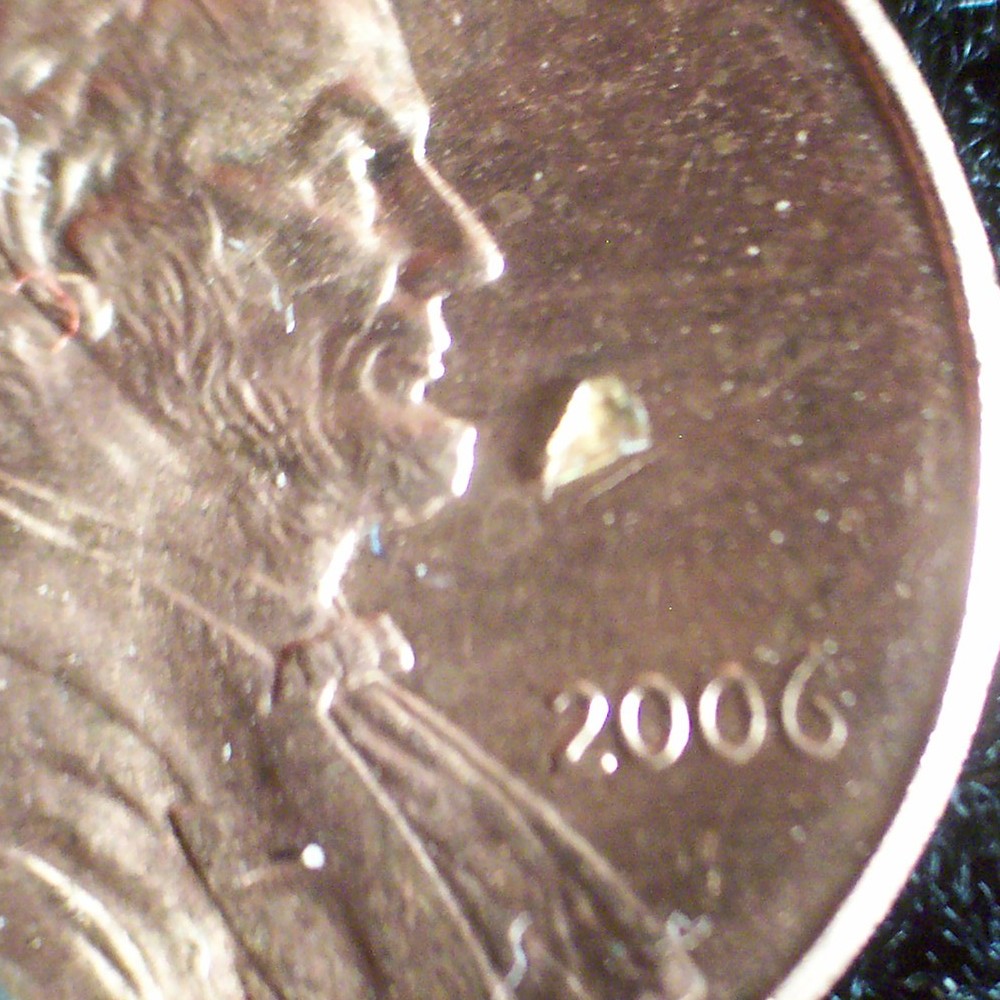
Yesterday I went running. It was kind-of wet out, and that makes it difficult to spot otherwise-shiny glass on the ground. Later last night I was limping a little and thought it might be a flare-up of plantar fasciitis. Come this morning I figured it must have been something stuck in my foot. It was indeed glass. A relatively big piece, in fact, in a relatively sensitive area. So here it is: the big piece of glass I stepped on yesterday.

a shard of glass as large as the "20" in "2006" on a penny

The Astonishing Train-Wreck of How JayceLand Gets Made

This year I decided I'd begin the process of replacing the Macintosh PowerBook G3 Firewire that just turned 10 years old yesterday. I had upgraded it to the maximum 2GB RAM and it's still a fine machine. It's just showing its age with sheer speed, particularly with browsing websites to find information about events and bands. So last month I ordered a Mac Mini (mid-2010) — that's apparently the clumsy official name, by the way — and started working with it. Well, having started from OS 8.1 on the PowerBook and as far back as System 7 on the LC III I had out of college, a huge portion of the software I have runs, as they say now, "in the Classic environment." OS X 10.3.9 suported Classic, largely because it ran on PowerPC hardware.

Well the Mac Mini has Intel chips and would never boot up any of the Classic systems. As such, support for it was dropped a few OS X releases ago. I figured I'd give the emulator SheepShaver a go — it professes to run nearly all software in Classic with the caveat that it apparently crashes a lot. I succeeded in getting it to boot up a Classic session (and ran comparable to the Powerbook) but it would not run FileMaker Pro. That's the software package that I use a lot. So big bummer there. I really don't want to buy the latest version because it's rather expensive and I'd prefer to go with something open-source and with a little more staying power (such as MySQL which seems to have a big enough head of steam that it'll be around for a while.)

The dilemma was how to continue to do work; the solution is a mess. I keep the PowerBook running most of the time specifically to have access to FileMaker Pro 5 and Quicken Deluxe '98 (only the name is not Y2K compliant). I wrote an AppleScript that does two things. First, when one of several scripts I wrote for FileMaker Pro request opening a website, it sends the request to the Mac Mini and opens it there. Second, and more terrifying, is that it synchronizes the clipboard between the two machines, so if I copy the name of a book in FileMaker Pro, it's available on the Mac Mini clipboard so I can search Amazon, and if I copy a Google Maps link, it's available on the PowerBook and in FileMaker Pro.

I decided that I'd start migrating to something new, and it looks like that time is now. I don't intend on making JayceLand look or work any different (just as when I integrated the WordPress blog), but I might shoot for bring it up-to-date in terms of, say, 2005 or so. I have long considered making the whole website web-only rather than the hodge-podge I have had for the last 10 years or so. And up until now, it would have violated the one rule I have about JayceLand: it should be the least amount of work for me. But man, this whole AppleScripted FileMaker Pro'd PowerPC-Classic-OS X-Intel thing is quite a hassle.

Seeing Illimanjaro, The Missing Teens, and Thunderbang at the Bug Jar

It's been a while since I wrote about seeing music at all … but I have been out. I spent some time at The Bug JarMySpace link (219 Monroe Ave.) and met some cool people from the bands and from around town. The bands didn't start until late, but another local musician and friend of members of The Missing TeensMySpace link offered to let them play a bit in the basement. So we went there for a few minutes and a few songs — a proper preview of the great, high-energy rock with a lounge-jam edge we were to see later on.

Back at the Bug Jar, IllimanjaroMySpace link kicked things off with some high-power, melodic, fast rock. Their guitarist was particularly apt at very fast playing and did a few impressive solos. The Missing TeensMySpace link was up next, replacing the temporary iPod with Illimanjaro's drummer and not one but two keytars. Thunderbang!MySpace link finished things off with some well-executed funky lounge-rock and even got a few people dancing.

Watching Leonard Cohen: Songs from the Road at the Little

As a fan, I looked forward to seeing Leonard Cohen: Songs from the Road so I headed out to The Little (240 East Ave.) to see it tonight. I had a decent, light dinner at the cafe beforehand and was generally having a good night. I spoke with a woman who encouraged me to become a member of The Little — I often consider it, but my first step is always to go see a film.

So I settled in to watch. I was astonished at the dreadfully poor quality of this concert documentary. Edits were out of the 1970's "variety hour" playbook — I was fully expecting a pan to the overhead lights so the camera's Orthicon tube would render its unnatural flare. The cinematography looked like someone's uncle's wedding footage, albeit physically stable.  But the images often drifted in-and-out of focus, had copious electrically-powered zooms, terrible framing, and many camera-related glitches from the low-light situation. Editing was even worse as it was choppy like a kid with A.D.D. The editors also frequently switched between a right-facing wide shot to a left-facing close-up and back, requiring the viewer to constantly reorient themselves. The only good of it all were a few longer-than-average shots tightly highlighting Cohen's age-weathered face.

The music (and sound, thankfully) were excellent. I'm always amazed that the man is still playing music, but he is — and looks to have no intention of stopping. His singing retains a depth of emotion often lost after the thousandth rendition. So save your $10 and instead go to buy a couple used CD's that you don't already have. And go find a picture of the man and look at that while you listen.

Toward the end of the movie I had to resort to earplugs — not because the music was loud, but to drown out the quiet, constant chatter from (you guessed it!) the woman who wanted me to become a member. As someone who loves movies, I'm enamored of the Dryden with its excellent projection, and sound, and spoiled by my fellow cinephiles' respectful silence. If the Little skimps on anything it's the quality of the projection and sound (with tonight being a rare exception) and the patrons are self-absorbed jerks who can't keep their mouths shut for a measly 90 minutes.

Although, I must admit, membership is tempting in the sense that it's like paying for prisons. For if it weren't for the Little, the gentrifying class would certainly migrate to my precious Dryden and begin ruining it. So perhaps I will join — and maybe someday I'll have the opportunity to have my explanation of why I'm a member printed on one of their posters.

Hundreds of People Watch the Beast Pageant at the Dryden

The Beast Pageant screened at the Dryden Theater at George Eastman House (900 East Ave.) tonight. It took me a while to extricate my thoughts from the various sets I helped build and from the scenes I acted in, but I think I finally have a grip on what great all-around acoustic soloist Jon Moses, and Albert Birney were getting at.

On its surface, The Beast Pageant follows Abe from his lifeless industrialized existence on a journey of reconnection with the natural world. It's all told in fantastical dream language, so time, space, and reality really have no grounding. It just is its own special place.

But dig deeper, and there's a layer about the beauty of human beings. Moses even used the phrase "it's an anti-aibrushing movie" in the question-and-answer. And by that, he means that the movie defies the media-generated images of the human form. All of us who acted as part of the natural world were nude (unless fully covered in costume). And the point is we're just regular people. We didn't spend 6 months prior to the film with a personal trainer to ensure our bodies were picture-perfect; rather we were all just people from around town who live normal lives.

This was the most consistently shocking element. You'll note that neither the D&C article nor the one in City Newspaper made mention of the near-constant nudity on screen. And it's because they can't unless they also subtly condemn it. So the authors of those pieces, finding a work they genuinely liked, opted instead to simply omit that fact.

To me this is a terrible precedent. It's not as if anyone in the U.S. does not see themselves naked at least once a day. Yet through the media's constant condemnation of the human body, we are taught to loathe the sight of it. And through that we loathe ourselves. And, oddly enough, we strive to buy products to give us satisfaction — so the media will approve of our appearance.

And so that theme runs through The Beast Pageant as well. The giant machine in Abe's apartment is an entertainment system (in addition to personal companion, and provider of all his physical needs.) The machine resists Abe's attempt to escape — much as the media machine resists the existence of The Beast Pageant.

But somehow, I think The Beast Pageant is going to win, one way or another.

Dogtooth at the Dryden

I headed out to the Dryden Theater at George Eastman House (900 East Ave.) to see Kynodontas (Dogtooth). I suspected so, and sort-of confirmed when I checked Google's Language Tools: Kynodontas is the phonetic spelling of Κυνόδοντας which means "bicuspid" or what we'd usually call the "canine tooth". Breaking things down a bit, σκύλος is "dog", but κυνικός is "canine" and δόντι is "tooth" so it appears to me that the Greek is, as in English, literally "canine tooth". But in a way, calling the film "Dogtooth" makes more sense — the whole premise of the film is as if social customs were "translated" to another language then back again, repeating until no further changes happen.

The Dryden calendar describes the film as a "jet-black comedy about sexual repression". Their write-up implies that the universe where the film takes place is essentially the same as our own, and that the depicted family is highly unusual. I took away that the universe of the film is represented by the family — that the family is more a typical family than anything else. Since almost the entirety of the film is within the family's securely secluded compound of a home, there's little evidence to support either case.

The title comes from the notion that the central couple's two daughters and son must wait for a "dogtooth" to fall out before they are permitted to leave the compound. In the mean time, the family has fabricated games, they lie about language to their children (i.e. a "zombie" is a small yellow flower), and the outside world is said to be inhospitable and dangerous. But the story is told in an extremely dry fashion: as if it's all just a day-in-the-life of any family, with all the mundane details. Except, of course, that the behavior is so strange to us as to be disturbing — the father hires a woman at his workplace to engage in ritualistic, loveless sex with his son, for instance.

I saw the film in two ways. First was that it represented an example of fundamentalist logic. The father was the only one permitted to leave, and he provided for all the family's needs, and supplied all their information as he saw fit. Second, and more strongly, I felt it was just as bizarre as an outside culture may see how we live.

As it is, I spend a lot of time frustrated with the status quo and how it goes against logic, reason, and goodness. How can it be, for instance, that a person can be killed by a car and it's likely they will be blamed for it? Is it not the driver's responsibility to be in total control of their machine? It seems that an outside culture would be horrified to learn that we think this is okay.

The film just flooded me with more of the same. Has anyone ever killed a spider, bee, or snake for no logical reason other than we learned at an early age that these things are evil or dangerous? Can you think of a time when your parent (or you as a parent) ever told a child a lie about what a word means because they weren't "ready" to understand it yet? And what of all the myths that are passed off as fact in this supposed time of reason? — cell phones never caused a gas station fire (it's the static charge from getting into and out of the car), and insisting that patrons wear shoes does not make a restaurant more sanitary, to name a couple.

I will add that the film stirred quite a bit of controversy (and discussion).  Several people walked out during the screening, and almost as many people hated it as loved it.  One factor was some of the more shocking and visceral scenes which (curiously enough) depicted sex or violence. Another was the patriarchal, totalitarian state of affairs within the household. And the lack of comedy to many people's sensibilities. So it's definitely not for everyone, and not a whimsical film to enjoy on a rainy afternoon. At least not for everyone.